Golden Guide to Hallucinogenic Plants: An Overview
This guide explores psychoactive flora, detailing historical uses and cultural significance of plants altering perception. Many species have been utilized ritually for millennia.
Psychoactive flora encompasses a diverse range of plant species capable of inducing altered states of consciousness when consumed by humans. These alterations manifest as shifts in nervous system function, impacting perception, mood, cognition, and behavior. Throughout history, numerous cultures have intentionally utilized these plants for medicinal, religious, and recreational purposes, with some holding sacred status in ancient rituals for countless generations.
The fascinating world of psychoactive plants is characterized by a complex interplay of chemical compounds. Many plants contain multiple psychoactive substances, creating varied and nuanced effects. Understanding these compounds and their interactions is crucial for appreciating the power and potential risks associated with these botanical wonders.
Historical and Cultural Significance
For millennia, psychoactive plants have held profound cultural and spiritual importance across the globe. Indigenous traditions frequently incorporate these plants into sacred ceremonies, utilizing their properties for healing, divination, and connection with the spiritual realm. Evidence suggests ritualistic use dating back thousands of years, demonstrating a long-standing human fascination with altered states of consciousness.
From the ancient mysteries of Eleusis to the shamanic practices of the Amazon, psychoactive plants have shaped belief systems and social structures. Their use wasn’t solely religious; medicinal applications were also prevalent, with plants employed to treat a wide range of ailments. Understanding this historical context is vital for appreciating the complex relationship between humans and psychoactive flora.
Cannabis (Marijuana)
Cannabis species, including Sativa and Indica, are popular psychoactive plants used medically and recreationally, containing over 100 cannabinoids.
Cannabis Sativa and Indica
Cannabis sativa and Cannabis indica represent the two primary subspecies of the Cannabis plant, each exhibiting distinct characteristics influencing their effects. Sativa strains are generally associated with energizing, uplifting experiences, often preferred for daytime use, and are known for their taller growth patterns and narrower leaves. Conversely, Indica strains typically induce relaxation and sedation, making them suitable for evening or nighttime consumption.
These strains differ in their cannabinoid profiles, with Sativa often containing higher levels of THC and lower levels of CBD, while Indica may have a more balanced ratio. However, modern breeding practices have led to numerous hybrid strains blurring these lines, creating dynamic combinations of effects. Popular strains frequently represent hybrids, carefully cultivated to achieve specific cannabinoid balances and desired outcomes.
Tetrahydrocannabinol (THC) ‒ The Primary Psychoactive Compound
Tetrahydrocannabinol (THC) stands as the principal psychoactive constituent within Cannabis, responsible for the plant’s characteristic intoxicating effects. Unlike many other psychoactive substances, THC doesn’t contain alkaloids; it’s not an alkaloid, amine, or indole. THC interacts with the body’s endocannabinoid system, specifically binding to CB1 receptors in the brain, leading to alterations in perception, mood, and cognition.
The intensity of THC’s effects varies based on dosage, method of consumption, and individual tolerance. It’s crucial to note that THC is just one of over 100 identified cannabinoids present in Cannabis, contributing to the complex and nuanced experiences associated with the plant. Understanding THC’s role is fundamental to comprehending Cannabis’ psychoactive properties.
Cannabinoids Beyond THC: CBD and CBN
While THC is primary, Cannabis boasts a rich profile of cannabinoids, notably Cannabidiol (CBD) and Cannabinol (CBN). CBD is non-psychoactive, meaning it doesn’t produce the “high” associated with THC, but exhibits potential therapeutic benefits, including anti-inflammatory and anti-anxiety properties. It modulates THC’s effects, potentially lessening unwanted side effects.
CBN, a mildly psychoactive cannabinoid, forms through THC degradation. Often found in aged Cannabis, CBN is studied for its sedative qualities and potential in sleep aids. The interplay between THC, CBD, and CBN creates diverse effects, explaining the wide range of experiences users report. These compounds contribute to the plant’s complex pharmacological profile.
Medicinal Applications of Cannabis
Cannabis’s medicinal potential is increasingly recognized, driving extensive research. Historically used for various ailments, modern studies explore its efficacy in managing chronic pain, nausea (particularly during chemotherapy), and certain neurological conditions like epilepsy. Cannabis can stimulate appetite in patients undergoing treatments causing weight loss.
Furthermore, research suggests potential benefits for anxiety, PTSD, and multiple sclerosis. However, rigorous clinical trials are crucial to confirm these findings and establish standardized dosages. Legal access to medical cannabis varies widely, impacting research progress and patient access. The dynamic balance of cannabinoids plays a key role in therapeutic effects.
Legal Status and Regulations
Cannabis faces a complex legal landscape globally, ranging from complete prohibition to full legalization. Many jurisdictions regulate cultivation, sale, and use, often distinguishing between medical and recreational purposes. Laws surrounding Cannabis sativa and indica vary significantly, creating challenges for interstate commerce and research.
Despite growing acceptance, federal laws in some countries still classify cannabis as a controlled substance, hindering research and investment. Regulations often address THC content, product labeling, and age restrictions. Navigating these legal complexities is crucial for both consumers and businesses operating within the cannabis industry, impacting access and availability.
Plants Containing DMT
Many psychedelic plants contain DMT, often consumed via snuffs (Virola, Yopo) or brewed with MAOIs. Oral DMT requires high concentration for activation.
Virola Species and DMT Snuffs
Virola species are crucial sources of DMT, traditionally utilized by indigenous South American communities. These trees yield a resin containing substantial levels of N,N-Dimethyltryptamine, a potent psychedelic compound. Rather than oral consumption, which proves ineffective due to enzymatic breakdown, the resin is processed into powerful snuffs.
This preparation involves drying and pulverizing the resin, creating a fine powder administered directly into the nostrils. This method bypasses the digestive system, allowing DMT to rapidly enter the bloodstream and exert its effects. The experience is often described as intensely visual and profoundly spiritual, deeply rooted in the cultural practices of those who traditionally employ it.
Yopo (Anadenanthera) and DMT
Yopo, derived from Anadenanthera species, represents another significant source of DMT utilized in traditional South American practices. Similar to Virola, Yopo seeds contain substantial quantities of DMT, but are not orally active due to metabolic degradation within the digestive system. Consequently, indigenous cultures developed methods to administer the DMT directly, bypassing this obstacle.
Traditionally, Yopo seeds are roasted, ground into a powder, and then snuffed, delivering the psychoactive compound through the nasal passages. This method allows for rapid absorption into the bloodstream, inducing intense visual and auditory hallucinations. The ritualistic use of Yopo is deeply intertwined with shamanic practices and spiritual exploration.
The Role of MAOIs in DMT Activation
DMT’s oral inactivity stems from monoamine oxidase (MAO), an enzyme present in the gut that rapidly metabolizes DMT, rendering it ineffective when ingested alone. However, combining DMT with Monoamine Oxidase Inhibitors (MAOIs) dramatically alters this process, enabling oral activation.
MAOIs temporarily disable the MAO enzyme, preventing the breakdown of DMT and allowing it to reach the bloodstream intact. This principle is central to the preparation of Ayahuasca, a traditional Amazonian brew. Ayahuasca incorporates plants containing DMT alongside those containing MAOIs, creating a synergistic effect. Without MAO inhibition, sufficient DMT concentrations for psychoactive effects cannot be achieved orally.
Oral Inactivity of DMT and Concentration Requirements
DMT exhibits significant oral inactivity due to rapid metabolism by monoamine oxidase (MAO) enzymes within the digestive system. This enzymatic breakdown prevents DMT from reaching the brain in sufficient quantities to induce psychoactive effects when simply ingested. Consequently, direct oral consumption of DMT is generally ineffective.
To overcome this limitation, extremely high concentrations of DMT would be required for vaporization, bypassing the digestive system. However, achieving such concentrations is impractical and poses significant challenges. The necessity of MAO inhibition, or alternative administration methods like smoking or intravenous injection, highlights DMT’s unique pharmacokinetic properties and the complexities of its activation.

Other Notable Hallucinogenic Plants
Diverse species induce altered states, including Salvia divinorum, psilocybin mushrooms, peyote, San Pedro cacti, Iboga, and Ayahuasca – each with unique properties.
Salvia Divinorum: The Dissociative Sage
Salvia divinorum, a dissociative hallucinogenic sage, originates from the Sierra Mazateca region of Mexico, traditionally used by Mazatec shamans for divination and healing rituals. Unlike many psychoactive substances, Salvia doesn’t contain alkaloids or phenethylamines; its primary active compound is salvinorin A, a potent kappa opioid receptor agonist.
This unique mechanism results in short-lived, intense experiences characterized by altered perception of reality, visual distortions, and feelings of detachment from the body. Salvinorin A is typically consumed through smoking or vaporizing the dried leaves, producing effects within minutes that last only a few hours. Due to its potency and unique effects, Salvia divinorum is subject to varying legal statuses worldwide.
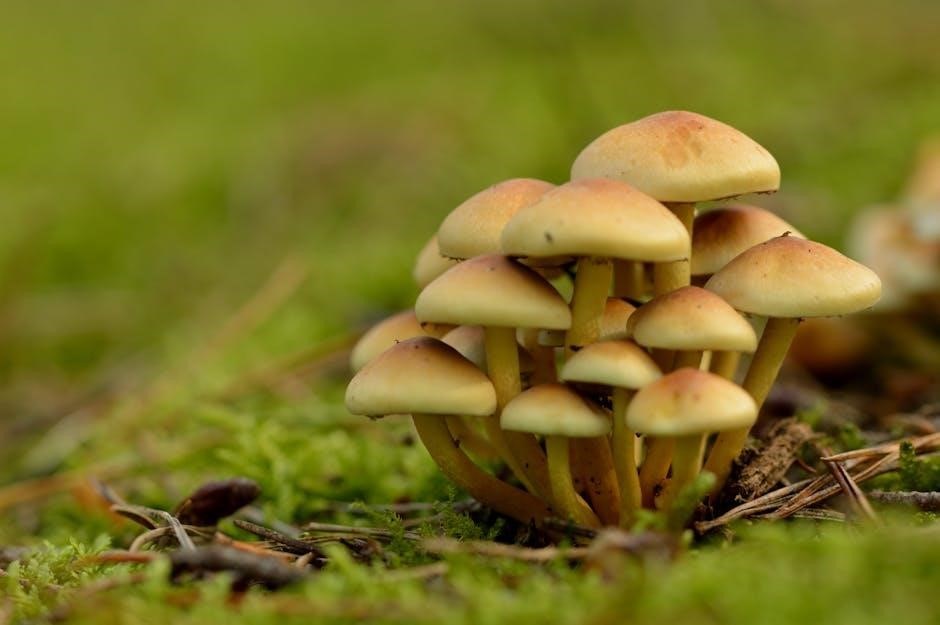
Psilocybin Mushrooms (Psilocybe genus)
Psilocybe mushrooms, commonly known as magic mushrooms, contain psilocybin and psilocin – psychoactive compounds producing altered states of consciousness. Found globally, these fungi have a long history of traditional and religious use, particularly in Mesoamerica, where they were integral to spiritual practices.
Effects typically include visual and auditory hallucinations, altered perception of time, and profound introspective experiences. Psilocybin is metabolized into psilocin, which primarily affects serotonin receptors in the brain. Consumption methods vary, including fresh or dried ingestion. Legal status differs significantly, ranging from decriminalization to strict prohibition, reflecting ongoing research into their therapeutic potential.
Peyote and San Pedro Cacti (Lophophora and Echinopsis genus)
Peyote (Lophophora williamsii) and San Pedro (Echinopsis pachanoi) cacti are revered for their psychoactive properties, stemming from mescaline content. Traditionally used by Indigenous peoples of North America for spiritual ceremonies, Peyote holds deep cultural significance within the Native American Church. San Pedro, originating in the Andes, has a similar history of ritualistic use.
Mescaline induces visual and auditory hallucinations, altered thinking, and profound emotional experiences. Preparation methods vary, involving ingestion of the cactus material, often after prolonged simmering. Legal status is complex, with protected status for religious use by recognized tribes, but generally illegal otherwise.
Ayahuasca: A Traditional Amazonian Brew
Ayahuasca is a potent psychoactive brew originating from the Amazon rainforest, traditionally used by Indigenous cultures for spiritual healing and divination. It’s created by combining the Banisteriopsis caapi vine – containing beta-carbolines – with plants containing DMT, like Psychotria viridis. The beta-carbolines act as MAOIs, enabling DMT to become orally active.
Ayahuasca induces intense visual and emotional experiences, often described as a journey into the subconscious. Ceremonies are typically guided by experienced shamans, and involve purging – vomiting and diarrhea – considered part of the cleansing process. Its increasing popularity raises ethical concerns regarding cultural appropriation.
Iboga (Tabernanthe iboga) ‒ A Powerful African Plant
Tabernanthe iboga, a potent plant native to West Africa, holds significant cultural and spiritual importance for the Bwiti people. The root bark contains ibogaine, a powerful psychoactive alkaloid known for its unique effects on consciousness. Traditionally, iboga is used in initiation rites and healing ceremonies, facilitating profound introspection and spiritual connection.
Ibogaine is known to interrupt addictive patterns, and has garnered attention for its potential in treating substance abuse. However, it carries significant risks, including cardiovascular complications, and should only be administered under strict medical supervision. Its use outside traditional contexts raises ethical considerations.

Understanding Psychoactive Compounds
Psychoactive compounds, like alkaloids, terpenoids, and phenethylamines, profoundly impact the nervous system, altering perception, mood, and cognitive functions within the human body.
Alkaloids and Their Effects
Alkaloids represent a diverse group of naturally occurring organic compounds, frequently possessing potent pharmacological effects on the human nervous system. These compounds, found abundantly within many hallucinogenic plants, are largely responsible for the altered states of consciousness experienced. Notably, DMT, a powerful psychedelic alkaloid, is present in plants like Virola and Anadenanthera, often consumed as snuffs or within the Ayahuasca brew.
The effects of alkaloids vary significantly depending on their specific chemical structure and interaction with neurotransmitter systems. Some alkaloids act as agonists, mimicking neurotransmitters, while others function as antagonists, blocking their activity. This interaction leads to changes in perception, mood, and cognition. Understanding the specific alkaloid profile of a plant is crucial for predicting its psychoactive effects and potential risks.
Terpenoids and Their Contribution to Hallucinogenic Experiences
Terpenoids, a large and diverse class of organic compounds, significantly contribute to the overall hallucinogenic experience, often working synergistically with alkaloids. While not typically the primary psychoactive agents, terpenoids modulate the effects of alkaloids, influencing the intensity, duration, and subjective qualities of altered states. Found abundantly in essential oils, these compounds contribute to the aroma and flavor profiles of plants like Cannabis.
In Cannabis, terpenoids like myrcene, limonene, and pinene interact with cannabinoids, such as THC and CBD, to produce the “entourage effect.” This suggests that the combined effect of terpenoids and cannabinoids is greater than the sum of their individual effects. Terpenoids can also possess their own subtle psychoactive properties, contributing to relaxation, euphoria, or altered sensory perception.
Phenethylamines: A Diverse Group of Psychoactives
Phenethylamines represent a broad family of psychoactive compounds, exhibiting a wide range of effects on the nervous system. These compounds share a common structural core, but subtle variations in their molecular structure lead to dramatically different pharmacological properties. Some phenethylamines act as stimulants, while others produce hallucinogenic or empathogenic effects.
Mescaline, found in Peyote and San Pedro cacti, is a well-known phenethylamine with potent hallucinogenic properties. Other examples include MDMA (ecstasy) and various 2C-series compounds, known for their empathogenic and psychedelic effects. The activity of phenethylamines often involves interactions with serotonin receptors in the brain, influencing mood, perception, and cognition.
Risks and Safety Considerations
Hallucinogenic plants pose psychological and physical risks, including altered perceptions and potential interactions. Legal consequences are also a significant concern for users.
Potential Psychological Effects
The use of hallucinogenic plants can induce a wide spectrum of psychological effects, ranging from mild alterations in mood and perception to profoundly transformative experiences. Users may encounter vivid hallucinations, altered states of consciousness, and shifts in cognitive processes.
Anxiety, fear, and paranoia are potential negative outcomes, particularly in individuals predisposed to mental health challenges or those consuming these substances in uncontrolled environments. Pre-existing psychological conditions can be exacerbated.
Dissociation, a feeling of detachment from reality or oneself, is also commonly reported. While some individuals find these experiences insightful and therapeutic, others may find them distressing and disorienting. Careful consideration of one’s mental state and setting is crucial before engaging with these plants.
Physical Risks and Interactions
While often perceived as psychologically driven, hallucinogenic plant use carries potential physical risks. Increased heart rate and blood pressure are common physiological responses, posing dangers for individuals with pre-existing cardiovascular conditions. Nausea and vomiting can also occur, leading to dehydration.
Crucially, these plants can interact dangerously with certain medications, particularly antidepressants and MAOIs, potentially causing serotonin syndrome – a life-threatening condition.
The oral inactivity of DMT, requiring MAOIs for activation, highlights this interaction risk. Furthermore, improper identification of plants can lead to accidental poisoning from toxic look-alikes. Responsible use necessitates thorough research and awareness of potential physical consequences.
Legal Consequences
The legal landscape surrounding hallucinogenic plants is complex and varies significantly worldwide. Cannabis, despite growing acceptance, remains federally illegal in many regions, with penalties ranging from fines to imprisonment for possession, cultivation, or sale. Plants containing DMT, like Virola and Yopo, are often classified as Schedule I controlled substances, carrying severe legal repercussions.
Even plants with traditional or medicinal uses, such as Peyote and Ayahuasca, face restrictions due to their psychoactive components.
Navigating these laws requires diligent research and understanding of local regulations. Ignoring legal ramifications can result in substantial fines, criminal records, and potential loss of personal freedoms.
Ethical Considerations and Responsible Use
Respect indigenous traditions, avoid exploitation, and prioritize harm reduction strategies when engaging with these powerful plants and their profound effects.
Respect for Indigenous Traditions
Acknowledging the deep historical and spiritual roots of hallucinogenic plant use is paramount. For millennia, numerous cultures have integrated these plants into sacred ceremonies, healing practices, and worldview understandings. Approaching these traditions with humility and reverence is crucial, recognizing that knowledge isn’t simply information to be consumed, but a living heritage.
Avoid appropriating rituals or practices without proper guidance and permission from originating communities. Genuine engagement requires building relationships based on reciprocity and mutual respect, not extraction or commodification. Supporting indigenous-led initiatives and advocating for the protection of their cultural rights are vital steps towards ethical engagement.
Avoiding Exploitation and Misappropriation
The increasing interest in hallucinogenic plants presents risks of exploitation and cultural misappropriation. Commercialization without benefit-sharing with indigenous communities is a significant concern, turning sacred knowledge into profit. Misrepresenting traditional practices or claiming ownership of ancestral wisdom is deeply unethical.
Responsible engagement demands transparency and a commitment to equitable partnerships. Support organizations working to protect indigenous intellectual property rights and promote fair trade practices. Be critical of products or experiences that lack clear provenance or demonstrate a disregard for cultural sensitivity. Prioritize learning from communities, not simply about them.
Harm Reduction Strategies
Navigating hallucinogenic plant experiences requires prioritizing safety and minimizing potential harm. Thorough research is crucial, understanding both psychological and physical risks. Begin with low doses in a safe, supportive environment – a ‘set and setting’ approach. Having a sober sitter is highly recommended, providing emotional support and ensuring well-being.
Be mindful of potential interactions with medications or pre-existing mental health conditions. Avoid combining substances. Recognize that challenging emotional experiences may arise, and develop coping mechanisms beforehand. Post-experience integration – processing and reflecting on the journey – is vital for long-term benefit.
Future Research and Emerging Trends
Neuroscientific studies are expanding our understanding of these plants’ effects, revealing potential therapeutic applications and reshaping psychedelic research landscapes.
Neuroscientific Studies of Hallucinogenic Plants
Current neuroscientific investigations are intensely focused on unraveling the complex mechanisms by which hallucinogenic plants impact the brain. Researchers are employing advanced neuroimaging techniques, such as fMRI and EEG, to observe alterations in neural activity and connectivity during psychedelic experiences. A key area of study involves the Default Mode Network (DMN), often observed to exhibit decreased activity under the influence of substances like psilocybin and DMT.
These changes in DMN activity are hypothesized to correlate with the dissolution of ego boundaries and altered states of consciousness. Furthermore, studies are exploring the role of serotonin receptors, particularly the 5-HT2A receptor, in mediating the effects of many hallucinogens. Understanding these neurobiological processes is crucial for unlocking the therapeutic potential of these plants and developing targeted interventions for mental health conditions.
Potential Therapeutic Applications
Emerging research suggests hallucinogenic plants hold significant promise in treating various mental health disorders. Psilocybin-assisted therapy is showing remarkable efficacy in alleviating treatment-resistant depression and anxiety, particularly in end-of-life care. Studies indicate potential benefits for individuals grappling with PTSD, addiction, and obsessive-compulsive disorder. The ability of these substances to promote neuroplasticity – the brain’s capacity to reorganize itself – is considered a key mechanism of action.
Furthermore, ibogaine is being investigated for its potential to interrupt addictive patterns, while ayahuasca shows promise in addressing trauma and fostering emotional healing. However, rigorous clinical trials are essential to establish safety, efficacy, and optimal therapeutic protocols before widespread adoption.
The Evolving Landscape of Psychedelic Research
A renaissance in psychedelic research is underway, fueled by renewed interest and increasingly sophisticated neuroscientific tools. Historically stigmatized, these substances are now subjects of rigorous investigation at leading universities and research institutions globally. Funding for psychedelic studies has dramatically increased, attracting both public and private investment.
Current research focuses on understanding the mechanisms by which these compounds impact brain function, particularly concerning neuroplasticity and default mode network activity. Clinical trials are expanding to explore therapeutic applications for a wider range of conditions, moving beyond initial focuses on depression and anxiety. Ethical considerations and responsible research practices remain paramount.